
Articles
Monolith to Microservices Migration: How to Break the Big Bang Habit

By Claus Villumsen
27 July, 2026
Share this article
Monolith to microservices migration is one of the most misunderstood projects in enterprise software. Most teams don't fail because the technology is too hard. They fail because they try to do everything at once, and six months in, they're running two broken systems instead of one working one.
Let's be direct about this. The big-bang rewrite - the "we'll freeze the monolith, rebuild everything in parallel, and cut over on a date" plan - has an ugly track record. Martin Fowler has been writing about the dangers of this approach since at least 2004, and yet teams still walk into it. They do it because it feels clean. It feels decisive. It feels like real progress. It rarely is. The incremental approach - patiently, piece by piece, service by service - is slower to start and faster to finish. That's the argument this post makes, and it will show you exactly how.
Think about the last time your organization made a major architectural decision. How much of that decision was driven by genuine technical logic, and how much was driven by the desire to finally do something bold enough to feel like change?
What Does a Successful Monolith to Microservices Migration Actually Look Like?
A successful monolith to microservices migration looks nothing like a software project. It looks more like urban planning. You don't bulldoze a city to rebuild it. You identify one district that's causing problems, reroute traffic around it, rebuild it carefully, and then move on to the next. The city keeps functioning the whole time. People still get to work. Businesses stay open.
The most important principle in any incremental migration is that the monolith must remain fully functional at every stage of the process. That sounds obvious. In practice, it's the constraint that most teams violate first. They start extracting services without properly isolating data. They introduce shared databases between the old system and the new one. They create a hybrid architecture that has all the complexity of microservices and none of the benefits. Then they blame microservices.
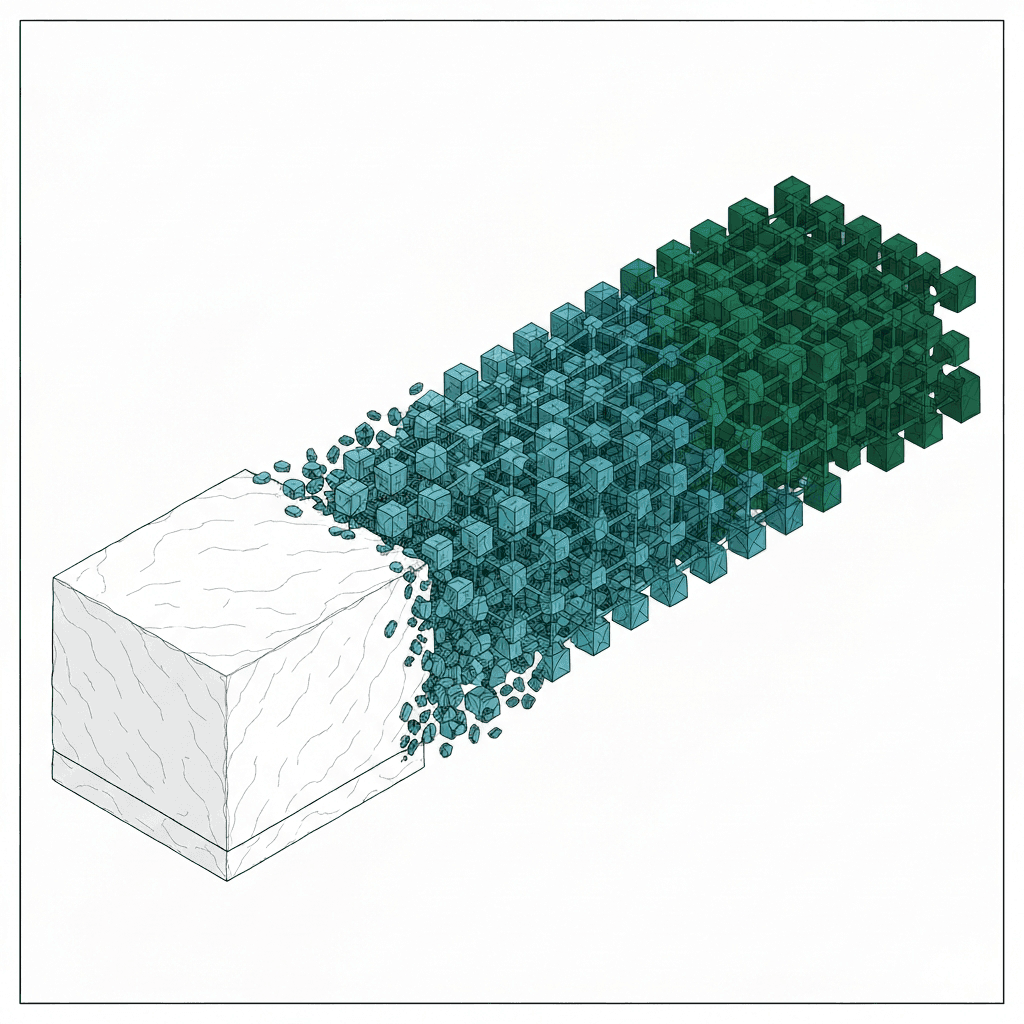
The reference model here is the Strangler Fig pattern, named after a type of tropical tree that gradually grows around its host until the host is replaced entirely. You route new functionality through new services. You gradually migrate old functionality over. At some point, the monolith has nothing left to do and you switch it off. The monolith never had to "go down." The team never had to "freeze" development for six months. The business never had to hold its breath.
That's the target. Getting there requires deliberate sequencing, honest assessment of where your dependencies actually live, and a team that's disciplined enough to resist the temptation to go faster than the architecture can absorb.
Why Do So Many Teams Get Monolith Migration Wrong from the Start?
The answer is almost always the same: they start with the wrong question. The question most teams ask is "how do we split this monolith into microservices?" The question they should be asking is "which parts of this monolith are causing us the most pain right now, and what would it cost to isolate just one of them?"
There's a meaningful distinction between those two questions. The first one assumes the whole monolith is the problem. The second one acknowledges that the monolith probably works fine in most places, and only a handful of seams are genuinely holding the team back. Maybe it's the payments module, which blocks six teams every time someone needs to change a pricing rule. Maybe it's the reporting engine, which requires a full deployment to update a single query. Maybe it's user authentication, which is so tightly coupled to everything else that nobody dares touch it.
Start with the highest-pain seam, not the most architecturally elegant one. This is a discipline problem as much as it is a technical one. Architects love to draw clean diagrams. But the first microservice you extract doesn't need to be clean. It needs to be useful, stable, and independently deployable. That's it. The elegance comes later.
The Thoughtworks perspective on microservices and the monolith makes this clear: organizations that succeed with migration tend to do so because they establish clear domain boundaries early, not because they have the best CI/CD tooling or the smartest engineers. Domain clarity is the foundation. Everything else is implementation detail.
How Do You Identify the Right Services to Extract First?
This is where the work begins, and it is genuinely hard. A monolith that's been running for eight years doesn't come with a map. It comes with tribal knowledge, outdated documentation, and a handful of engineers who have quietly become the only people who understand how the data flows through the system. If those engineers leave, the knowledge leaves with them.
The best starting point is not the codebase. It's the business. Draw a rough map of your core business capabilities. Payments. Orders. Inventory. Customer identity. Notifications. These are not technical modules - they're business domains. Now ask your engineering team: which of these domains has the highest rate of change? Which one causes the most deployment conflicts? Which one do multiple teams fight over in code review? That overlap is your signal.
Once you've identified the candidate domain, you need to understand its data dependencies. This is where most technical assessments fall short. Two modules can look decoupled in the code but share twenty tables in the database. A monolith's database is usually far more tangled than its codebase, and the database is what makes extraction genuinely dangerous. You cannot just lift a module out and point it at its own database without understanding every read and write it shares with the rest of the system.
Tools like vFunction's Application Transformation Engine, which uses runtime observation to map actual architectural flows rather than just static code analysis, represent one approach to making this analysis faster and more reliable. The technology has matured significantly - Microsoft's partnership with vFunction for Azure modernization projects is an indicator of how seriously enterprises are taking AI-assisted dependency analysis. But tooling helps with discovery. The judgment call about what to extract first still belongs to a human who understands the business.
If you had to point to the single most coupled, most fragile, most "nobody wants to touch it" part of your current system - how long has it been in that state, and what has it actually cost you in delayed releases, engineering hours, and team morale?
What Does an Incremental Migration Plan Actually Contain?
A real migration plan is not a slide deck with a three-year roadmap. It's a series of short, reversible experiments, each one designed to reduce risk before the next step begins. Here is what that looks like in practice.
Phase one is observation. Before you change a single line of code, you spend time understanding what the system actually does at runtime. Not what the documentation says it does. Not what the original architect intended. What it does today, under real load, with real data. This phase produces a dependency map - which modules call which, which tables are shared, which operations are synchronous versus asynchronous. This typically takes two to four weeks with the right tooling. Without tooling, it can take months.
Phase two is isolation. You pick the first candidate service - the highest-pain seam you identified earlier - and you build a clean boundary around it inside the monolith before extracting it. This means introducing interfaces where there were direct calls, strangling the shared database tables down to the ones this module actually owns, and writing integration tests that will tell you if anything breaks when you move the module out. You haven't extracted anything yet. You've just made extraction possible.
Phase three is extraction. You deploy the service independently. You route traffic to it through an API gateway. The monolith still handles everything else. You monitor. You fix. You confirm that the seam holds under production conditions. Only when the extracted service is stable do you move to the next candidate - and the pace you set here will define the pace of the entire migration.
Phase four is iteration. You repeat the cycle. The monolith gets smaller with each iteration. The team gets faster. The risk profile improves. What felt impossible in month one feels routine by month twelve. The Stack Overflow engineering blog's candid assessment of microservices complexity is worth reading here - the overhead of distributed systems is real, and your team needs to build the operational muscle gradually. You cannot absorb the full complexity of a microservices architecture in a single deployment.
Where Does AI Actually Help with Microservices Migration - and Where Does It Fall Short?
AI-assisted modernization tools are genuinely useful in this process. Let's be specific about where. The hardest and most time-consuming part of any migration is the initial analysis phase - understanding what the code does, where the dependencies live, and which domains are cleanly separable versus which ones are deeply entangled. This is work that used to require weeks of manual code reading and architecture workshops. AI tools can compress that significantly.
Runtime analysis tools, including those built on machine learning models trained on large codebases, can identify architectural patterns, flag circular dependencies, surface hidden coupling in database access layers, and generate a first-draft service boundary map in days rather than weeks. For large monoliths with millions of lines of code, that kind of acceleration is the difference between a project that gets funded and one that never starts.
But AI tools are excellent at describing what exists and genuinely poor at deciding what should exist. They can tell you that your orders module shares fourteen database tables with your inventory module. They cannot tell you whether your business wants those to be separate services or whether combining them would better reflect the way your operations team actually works. That judgment is a business conversation, not a technical one. No model knows your domain better than the people who work in it.
There's another honest limitation worth naming. AI-generated service boundary suggestions are probabilistic outputs based on code structure. They don't account for team structure, for political constraints, for the fact that one particular module is owned by a team that's already stretched thin. The best migration plans are ones where the AI analysis informs the decision and a human team makes it. The worst ones are where the AI output becomes the plan. The gap between those two outcomes is significant, and it's the gap where most failed AI-assisted migrations live.
The trajectory here is clearly positive. Tools are improving fast, the cost of analysis is dropping, and the accuracy of dependency mapping is reaching a level where it's genuinely trustworthy for initial scoping. But the discipline of incremental migration - the patience, the sequencing, the willingness to extract one service at a time - that's a cultural and organizational problem. AI doesn't solve it. Leadership does.
How Do You Know When the Migration Is Actually Done?
This is a question most plans don't answer, which is one reason migrations drag on indefinitely. "Done" needs a definition before the project starts, not after it stalls.
The practical answer is that you're done when the remaining monolith contains no business-critical functionality that needs to scale independently of everything else. Some organizations reach a state where the monolith has been reduced to a thin orchestration layer - a coordinator that routes requests to services and handles a handful of legacy workflows that don't justify extraction. That can be a legitimate end state. It doesn't have to be zero.
What "done" should never mean is "we extracted twelve services and stopped because we ran out of budget." That's not a conclusion - it's a pause. And pauses in migration projects tend to become permanent. The monolith stops shrinking, the team moves on to other priorities, and two years later you have a monolith plus twelve microservices and twice the operational overhead. This happens more often than anyone publishes about, because it's not a story teams like to tell.
Set a minimum viable end state before you begin, define the metrics that will tell you when you've reached it, and hold that line even when the project gets hard. The metrics that matter most are deployment frequency, mean time to recovery, and the number of teams that can ship independently without coordinating with other teams. If those numbers are improving, the migration is working. If they're not, something in the approach needs to change - and it's better to know that in month three than in year two.
If you started an incremental migration today - not a full program, just one isolated extraction of the single most painful seam in your system - how long would it realistically take to have something in production, and what would you learn from it that no architecture diagram could tell you?
Frequently Asked Questions About Monolith to Microservices Migration
What is monolith to microservices migration?
Monolith to microservices migration is the process of breaking apart a single, tightly-coupled application into a collection of smaller, independently deployable services, each responsible for one business domain. The goal is to enable teams to develop, deploy, and scale parts of the system without affecting the whole.
How long does a monolith to microservices migration typically take?
For a mid-sized enterprise system, a properly scoped incremental migration takes 12 to 36 months. The timeline depends on the size of the codebase, the degree of database coupling, team capacity, and how strictly the organization follows an incremental approach. Big-bang rewrites often take longer and fail more often.
What is the Strangler Fig pattern and why does it matter for migration?
The Strangler Fig pattern, described by Martin Fowler, is an approach where new services are built alongside the monolith and traffic is gradually routed to them. Over time, the monolith handles less and less until it can be retired. It matters because it keeps the system live throughout the migration, dramatically reducing risk.
How is monolith migration different from a full system rewrite?
A rewrite replaces the whole system at once, requiring a freeze on the old system and a high-risk cutover event. Migration is incremental - it extracts one service at a time, maintains the monolith as the fallback, and moves at a pace the organization can actually sustain. Rewrites fail more often. Migrations finish more often.
What is the biggest technical risk in microservices migration?
The biggest risk is shared database coupling. Two modules can look separate in code but share dozens of database tables. Extracting one without cleanly separating its data leads to a distributed monolith - all the complexity of microservices with none of the independence. Database decomposition must happen alongside code decomposition.
Where do AI tools genuinely help in microservices migration?
AI tools are most valuable in the discovery phase - mapping dependencies, identifying domain boundaries, and flagging coupling that would otherwise take weeks of manual analysis to find. They reduce the time to first architectural insight significantly. They are not reliable substitutes for domain knowledge when deciding which service boundaries are right for the business.
How do you measure whether a microservices migration is succeeding?
The three metrics that matter most are deployment frequency, mean time to recovery, and team independence. If teams can ship changes to their service without coordinating with five other teams, the migration is working. If deployment frequency has not improved after six months, something in the architecture or process needs to change.
What should you extract first when migrating a monolith?
Extract the service that causes the most cross-team coordination pain, not the most architecturally interesting one. High-friction domains - the ones that block other teams, cause the most merge conflicts, or require full deployments for small changes - are the right starting point. Value delivered to the engineering team comes before architectural elegance.
Kodebaze helps engineering teams map legacy dependencies, identify the right extraction sequence, and execute monolith to microservices migration without stopping the business to do it. See how it works →
Related articles

AI


AI

AI
AI + Human
AI + Human software Solution
© 2026 Kodebaze. All Rights Reserved.
© 2026 Kodebaze. All Rights Reserved.