
Articles
Before You Refactor a Single Line, Here Is What Code Analysis Tells You That Your Team Cannot

By Claus Villumsen
21 August, 2026
Share this article
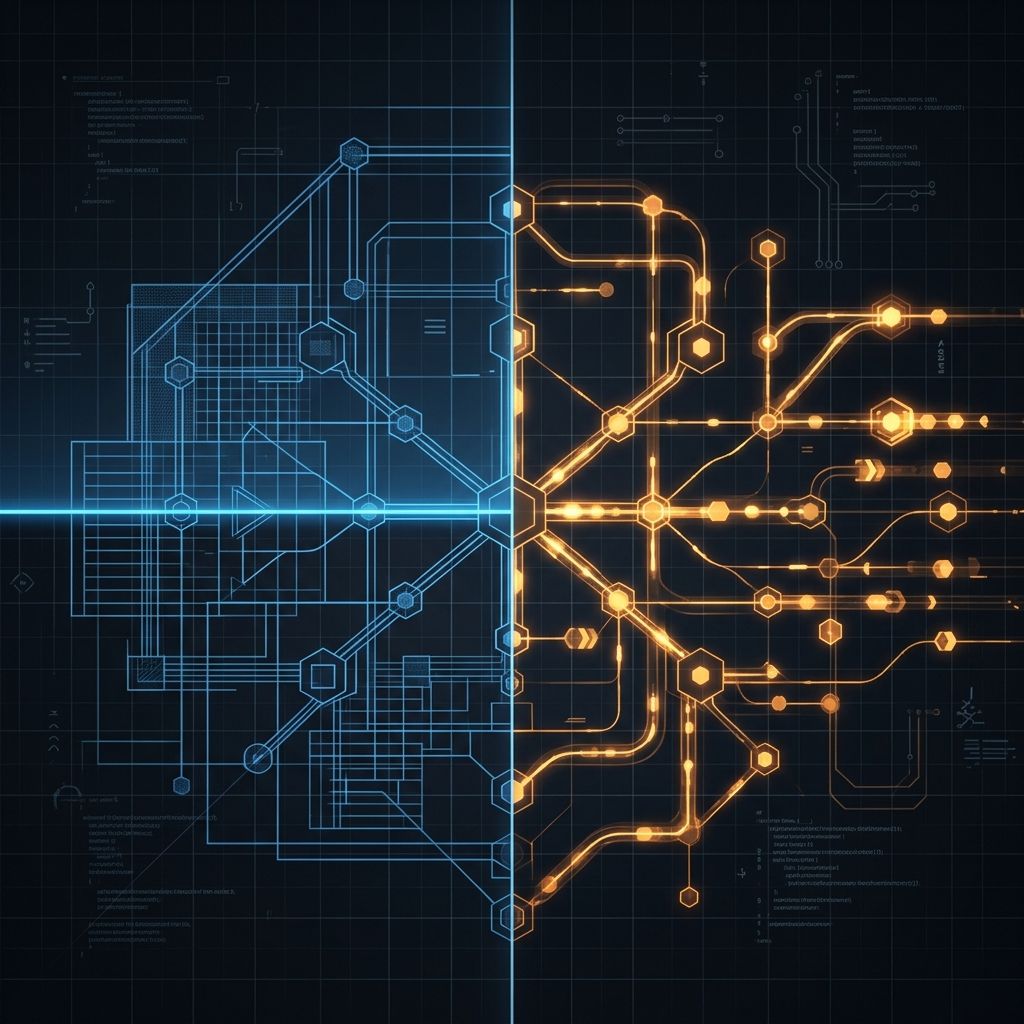
Your engineers have been living inside that codebase for years. They know which modules are fragile. They know which services nobody touches. They have a gut feeling about where the risk lives. And they are still wrong, not because they are bad engineers, but because no human being can hold a million lines of interdependent logic in their head and see all of it clearly at once. Static vs dynamic code analysis is not a replacement for that knowledge. It is the part of the picture their knowledge cannot provide.
There is a specific kind of confidence that precedes a painful modernization failure. It sounds like: "We know this system well. We have been running it for eight years." That familiarity is real and it matters. But familiarity is not the same as visibility. The two methods of code analysis that matter most before any modernization work begins are static analysis and dynamic analysis. They are not interchangeable. They are not redundant. They look at the same system from completely different angles and they find completely different problems.
When your team last assessed the legacy codebase, what method did they use, and how confident are you that it revealed the risks that were not already on their radar?
What does static code analysis actually find in a legacy system?
Static analysis scans source code without running it, finding structural flaws, security vulnerabilities, dead code, and architectural decay. It is fast, repeatable, and gives you a map of the codebase as it exists on paper. For legacy systems, it typically uncovers far more risk than anyone expected before they looked.
Static analysis reads your code the way an auditor reads a balance sheet. Nothing is running. No users are clicking anything. The tool walks through every file, every function, every dependency declaration and builds a picture of what exists and how it relates to everything else.
For a legacy system that has been running for a decade under rotating teams and shifting priorities, this is often the first time anyone has looked at the whole thing at once. What comes back is rarely comfortable. You find modules with cyclomatic complexity scores that indicate nobody could safely change them without introducing a defect. You find dependencies on libraries that were deprecated five years ago. You find security patterns that would fail any modern compliance audit. You find dead code that still gets compiled and deployed, carrying risk without providing value.
The structural picture static analysis produces is the prerequisite for every other decision you will make in a modernization program. You cannot plan a migration without knowing which components are tightly coupled. You cannot estimate effort without understanding where the complexity is concentrated. You cannot sequence a strangler fig or a domain decomposition if you do not know how the domains actually map to the code.
Martin Fowler's work on technical debt and code quality has long argued that the cost of this kind of structural decay is not theoretical. It compounds. Teams working in high-complexity, high-coupling codebases are slower, they make more mistakes, and they spend more time on coordination than on delivery. Static analysis gives you the quantified version of that reality.
The output of a serious static analysis run on a large legacy system is usually a long document that surprises people. That surprise is the point. It means you learned something before you started spending real money.
What does dynamic code analysis reveal that static analysis misses?
Dynamic analysis observes the system while it runs, capturing actual memory usage, thread behavior, API call patterns, and runtime dependencies. It finds defects that only appear under load or with real data, which static analysis cannot see at all. For legacy systems, it is where the genuinely dangerous surprises live.
Here is what static analysis cannot tell you. It cannot tell you which code paths actually execute in production and which are theoretical. It cannot tell you how the system behaves when two processes compete for the same resource. It cannot tell you where memory leaks quietly accumulate over a 48-hour period. It cannot tell you which external API calls fail silently and get swallowed by an error handler that logs nothing useful.
Dynamic analysis answers these questions by running the system and watching it. This means instrumented test environments, traffic replay from production logs, load simulation, and runtime profiling. It is more expensive to set up than static analysis and takes longer to produce results. It is also irreplaceable.
The kinds of problems dynamic analysis surfaces in legacy systems are the ones that cause outages during modernization. Race conditions. Memory exhaustion under concurrent load. Hidden state dependencies between services that appear decoupled on paper. Calls to external systems that only work correctly in specific network configurations. Configuration assumptions baked into runtime behavior that no one documented because everyone assumed it was obvious.
If static analysis shows you the skeleton of the system, dynamic analysis shows you the nervous system. And you cannot safely reorganize a body without understanding both.
Tools like runtime profilers, distributed tracing systems, and AI-assisted observation platforms are increasingly capable of capturing this behavioral picture at scale. VFunction, for example, has built tooling specifically aimed at observing legacy application behavior in production to inform modernization decisions, using AI to help prioritize which runtime patterns present the most structural risk. The insight behind that approach is sound: you need to see how the system actually behaves, not just how it was written.
If your team had to describe the runtime behavior of your three most critical legacy services under peak load, how precise would that description be, and what would it be based on?
How static vs dynamic code analysis work together as a risk framework
Static and dynamic analysis answer different questions and find different defects. Using both creates a two-dimensional risk picture: one layer shows structural problems in the code itself, the other shows behavioral problems that only emerge at runtime. Neither layer is optional if the goal is safe modernization.
The most dangerous assumption in legacy modernization is that any single analysis method is sufficient. It never is. The two methods are complements, not substitutes. They find problems in different dimensions of the same system.
Think of it this way. Static analysis is like inspecting the blueprints of a building. You can identify structural design flaws, spot where the load-bearing walls are, and flag where the electrical wiring was routed dangerously close to plumbing. All of that is valuable. But a blueprint inspection cannot tell you whether the pipes vibrate at a frequency that cracks the joints after ten years, or whether the building sways in a specific kind of wind. For that, you need to observe the building under real conditions.
Dynamic analysis is that observation. It does not replace the blueprint review. It extends it.
In practice, the sequence matters. Start with static analysis because it is faster to set up, produces findings quickly, and helps you identify which parts of the system deserve the deepest dynamic testing. A module with high complexity, poor test coverage, and multiple external dependencies flagged in static analysis is a priority target for dynamic profiling. You are not running dynamic analysis blindly across everything. You are using static findings to direct your dynamic effort toward the highest-risk areas.
ThoughtWorks' technology radar has repeatedly flagged runtime observability tooling as a critical investment for organizations managing complex legacy estates. The reasoning is consistent: you cannot modernize safely what you cannot observe accurately. The combination of static structure analysis and dynamic runtime observation is the observability baseline that makes modernization decisions defensible.
This matters especially when the people making modernization decisions are not engineers. A board or a CTO who needs to justify a multi-year modernization investment needs a risk picture grounded in evidence, and that evidence comes from running both types of analysis and translating the findings into business terms.
Where AI fits into code analysis and where it still falls short
AI accelerates both static and dynamic analysis significantly, helping teams prioritize findings, identify dependency patterns, and surface hidden risks faster. But AI does not replace the need to run both analysis types, and it cannot make the judgment calls about which findings matter most for your specific business context.
There has been a surge of AI-assisted tooling in the code analysis space over the past two years and some of it is genuinely useful. On the static side, AI can prioritize thousands of findings by likely impact rather than presenting a flat list that overwhelms any team trying to use it. It can identify patterns across a codebase that no human reviewer would spot across a million lines of code. It can suggest refactoring approaches for common anti-patterns and flag where those suggestions might introduce new risk.
On the dynamic side, AI helps with test generation, helping teams achieve meaningful coverage of complex execution paths faster than manual test writing allows. It helps with anomaly detection in runtime data, flagging behavioral patterns that deviate from baseline in ways that suggest hidden bugs or performance degradation.
This is real progress. It makes both types of analysis faster and more actionable.
Where AI still falls short is in the judgment layer - the translation from analysis findings to modernization decisions. An AI tool can tell you that a module has 47 external dependencies, a complexity score of 340, and has not been modified in six years. It cannot tell you whether that module is the core of a business process that three departments depend on daily, or a legacy report generator that nobody has requested in two years. That context comes from people. It comes from conversations with the business, from reviewing incident logs, from understanding which parts of the system are in the path of the company's strategic direction.
The practical implication is this: AI-assisted analysis tools are worth using. They compress the time it takes to get from raw codebase to actionable findings. But they work best when they are pointed by a team that already understands both analysis methods well enough to evaluate what the AI is surfacing. AI is the accelerator. Static and dynamic analysis are the methodology. The two are not the same thing.
What gets missed when organizations skip one layer of analysis
Organizations that run only static analysis walk into modernization projects blind to runtime behavior. Those that run only dynamic analysis miss structural decay that accumulates debt over time. Both gaps lead to the same outcome: costly surprises mid-project, when reversing course is expensive and visible to the business.
Let me be direct about what the skipped-layer failure looks like in practice, because it is common and it is avoidable.
The organization that runs only static analysis feels prepared. They have a report. They know which modules are complex and which are coupled. They begin decomposing services with confidence. Then, three months in, a service that looked clean on paper starts failing intermittently under production load. The team investigates and discovers a thread-safety issue that only manifests above a certain concurrency threshold. That behavior was invisible to static analysis. It was not invisible to dynamic analysis. Nobody ran dynamic analysis.
The organization that runs only dynamic analysis has a different problem. They have runtime traces and load test results. They can tell you how the system behaves today. What they cannot tell you is how much of the codebase is genuinely understood and maintainable versus how much has been accumulating structural decay for years. When engineers start refactoring, they discover that modules which performed fine under load are nearly impossible to safely change because of deep coupling and absent test coverage. The effort balloons. The timeline slips.
Both failures share the same root cause: an incomplete picture treated as a complete one.
The combination is not a luxury for organizations with large budgets and long timelines. It is the minimum viable analysis for any modernization project where failure carries real business consequences. Infoq has published detailed coverage of how runtime analysis and static inspection complement each other in large-scale migration programs, and the recurring theme is consistent: teams that invest in both move faster in the execution phase because they spend less time reacting to surprises.
If you discovered tomorrow that a major component of your legacy system behaves differently at scale than your team believes it does, how long would it take you to find out, and what would that delay cost?
Frequently Asked Questions
What is the difference between static and dynamic code analysis?
Static analysis examines source code without executing it, identifying structural issues, security vulnerabilities, and code quality problems at rest. Dynamic analysis runs the application and observes its real behavior under load. Together they find different classes of defects that neither method can catch alone.
Which type of code analysis should you run first on a legacy system?
Run static analysis first. It is cheaper, faster, and requires no running environment. It gives you the structural map of the codebase before you invest in setting up dynamic testing infrastructure. Dynamic analysis comes second to validate what static analysis flagged and to catch runtime-only behaviors.
Can static analysis alone tell you whether a legacy system is safe to modernize?
No. Static analysis tells you what the code looks like, not how it behaves under real conditions. A module can be structurally clean and still fail badly in production under concurrent load or with unexpected data inputs. Dynamic analysis is required to surface those runtime risks before modernization begins.
How long does it take to run both types of analysis on a large legacy codebase?
Static analysis on a codebase of one to three million lines typically takes hours to days depending on tooling and language coverage. Dynamic analysis takes longer because it requires test environments, traffic replay, or load simulation, often two to six weeks for meaningful coverage on a complex legacy system.
What does static vs dynamic code analysis cost compared to a failed modernization project?
A combined analysis engagement typically runs from tens of thousands to low six figures depending on system size. A failed or rolled-back modernization project on an enterprise system routinely costs millions in lost time, remediation, and business disruption. The analysis is not a cost. It is the cheapest risk mitigation available.
Do AI-powered tools change how static and dynamic analysis work?
Yes, meaningfully. AI accelerates static analysis by prioritizing findings by risk rather than dumping thousands of raw violations. For dynamic analysis, AI helps identify which execution paths deserve the most test coverage. But AI does not replace the need to run both methods. It makes them faster and more targeted.
What is the biggest mistake organizations make when analyzing a legacy codebase before modernization?
Running only one type of analysis, usually static, and treating the output as a complete picture. Static analysis shows the skeleton. Dynamic analysis shows the nervous system. Skipping dynamic analysis is how teams walk into a refactoring project confident about the code and then get ambushed by runtime behavior they never anticipated.
Kodebaze applies both static and dynamic code analysis to give you a complete risk picture of your legacy estate before a single line of production code is touched.
See how Kodebaze analyzes your system →Related articles

Legacy Modernization
AI
Most legacy system modernization risk frameworks flag the wrong things. Here's what actually determines whether your project succeeds or fails.


Legacy Modernization
AI
Application modernization services vary wildly in what they deliver. Here is how enterprise leaders evaluate and select the right one before committing.
Legacy Modernization
AI
A monolithic application runs as one tightly coupled unit. Here is what that means, why it matters, and how to know when it is time to break it apart.
AI + Human
AI + Human software Solution
© 2026 Kodebaze. All Rights Reserved.
© 2026 Kodebaze. All Rights Reserved.